
A digital rebrand and e-commerce platform for one of Europe’s largest tree nurseries.
For one of the largest nurseries in Europe, I accompanied the digital brand relaunch and the establishment of an international e-commerce platform. More than 40,000 articles, ERP connection and digital procurement processes combine brand presence, product range and operational processes.
Make the range digitally accessible.
In professional plant selection, a name and a picture are not enough. Sizes, qualities, availability and volume-related prices determine whether a product fits a construction project. For Lorberg, a large range of products had to be translated from the merchandise management system into an understandable digital experience.
The relaunch combined the brand image with the plant catalogue. The later web app focused on the procurement process. A supplementary PIM concept addressed the question of how ERP data generates publishable product information.
From company goal to concrete product experience.
I connected digital strategy, customer matching and product development. In direct cooperation with owners and management, it was important to consider the range, content and procurement together and to derive a meaningful digital development path from this.
The task went beyond individual views: information architecture, data sources, product selection and request had to share the same product logic.
A catalogue of plants that goes along with the range.
In the TYPO3 relaunch, 27 master templates for multilingual content and an extensive catalogue were set up. The dynamic connection to the merchandise management system ensured that product information and stocks remained connected to the product range.
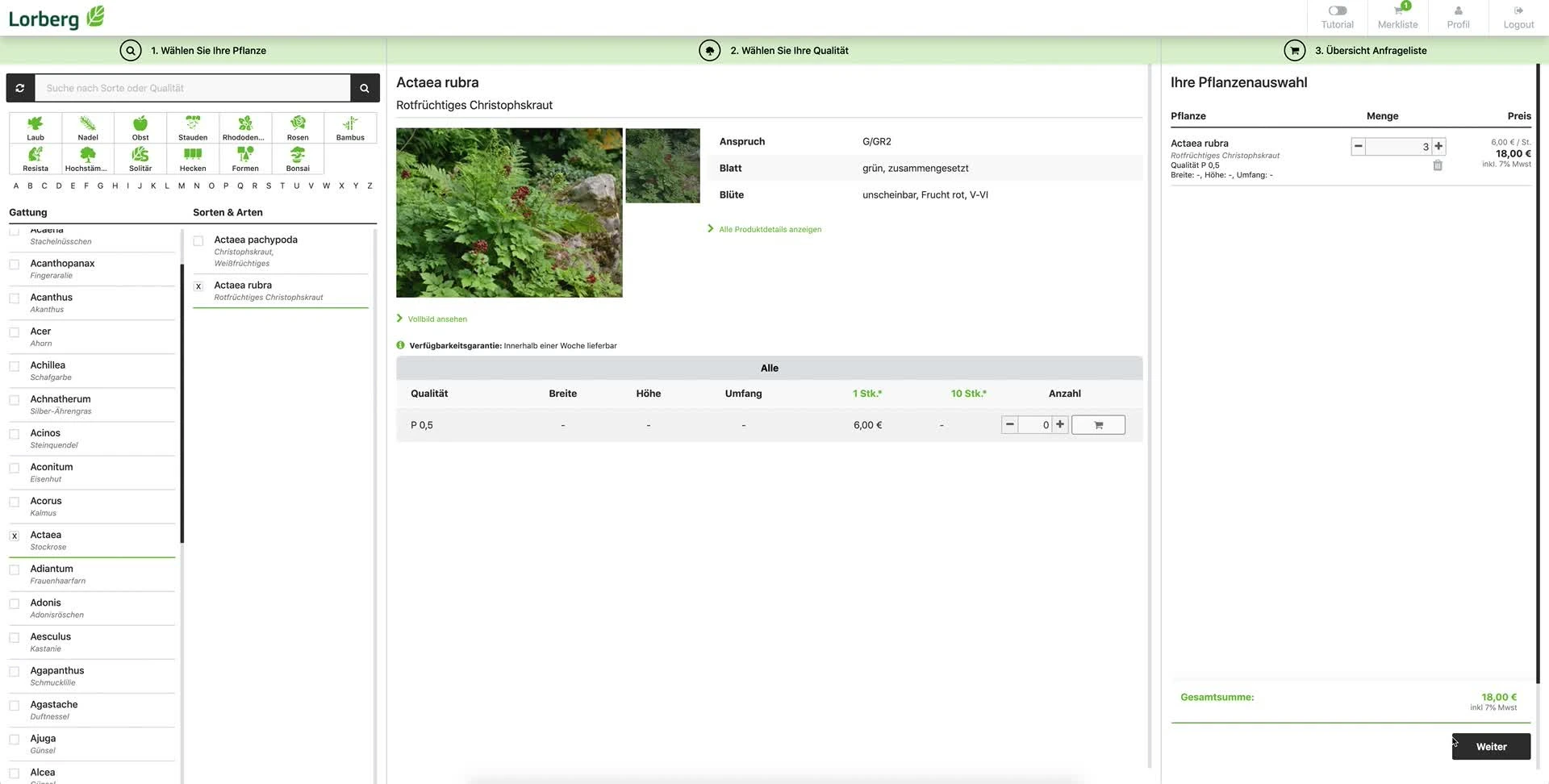
Categories, genera, characteristics and prices structure the entry. A search with autocomplete complements the filters. Products can already be noted in the results. The detailed view combines images and quality variants with further information.
Search, check, request – without losing context.
For the specialized web app, we questioned the usual sequence of separate shop pages. Three columns keep the most important tasks available at the same time: search, product details and the current selection. While further plants are being tested, the already compiled request remains visible.
Maintaining product context
Qualities, dimensions, stocks and seasonal prices are in the detail area. The selection need not be left for the next exam.
Explain the obligation
The final action is a non-binding request. Guest access as well as private and business accounts represent various shopping needs.
Addresses and construction projects help business customers to assign a selection to the appropriate project and delivery context. This is an essential part of the task: Professional procurement does not end with the selection of articles.
The same task. Another order.
On the smartphone, the three parallel columns become a guided sequence. Direct navigation combines search, testing and selection in a confined space. The underlying decision model is maintained even if the views appear one after the other.
In another iteration, I would align the terms selection, shopping cart and request even more closely to the actual conclusion. Especially in the B2B context, the wording shapes which obligation people expect behind an action.
Raw data becomes usable product information.
The PIM was developed as a concept for the preparation of product data. A completeness value per product makes visible which data sets still need maintenance. The dashboard condenses the status of the catalog; lists can be sorted and grouped by completeness.
Editorially, it can be determined which ERP qualities and prices appear online. Typical image sets and three text levels structure the content. A permission model supports different tasks; sensitive actions such as publishing and deleting require confirmation.
The PIM views show a documented concept status. They are not presented as a published product.
Commerce starts with data.
The result combines a catalogue of more than 40,000 plants with a specialized procurement logic. After the website relaunch, traffic increased by more than 300 percent.
The case shows how strongly data quality, UX and digital strategy are related. A good product experience requires content and processes on which it can rely. At the same time, a focused interface helps to complete professional tasks in their actual context.